Showing posts with label Photography. Show all posts

Sunday, May 31, 2026

Brion Gysin, Le dernier musée @ Musée d'art Moderne de la Ville de Paris

Brion Gysin, Dreammachine, 1979

In his time, Brion Gysin was vital to the development of mid-century experiments in poetry, painting, and other media. The Musée d'art Moderne has staged a retrospective of Gysin who today looks like a marginal figure, backgrounded by the reputations of his contemporaries such as William Burroughs. It's difficult to know where to start the conversation about Gysin's work because he was so multifaceted as an artist. He worked in painting, photography, music, poetry. But no matter what medium he was working with, conceptually, he was driven by a desire to transcend. Gysin's constant striving for an art to exceed the material and institutional structures is palpable and admirable.

Brion Gysin, Magic Mushrooms, 1961

He had an early fascination with hieroglyphs, particularly in the form of Japanese and Arabic scripts. He saw these scripts, repeated, read from right to left, bottom to top, as a way of breaking out of familiar structures. In addition, he was drawn to their rhythm that he connected to a kind of unconscious expression, otherwise found in LSD tripping. When exploring a script as artistic figure, Gysin would always layer it with a grid, capturing the tension between structure and freedom, the physical and the transcendental. 

Brion Gysin, Naked Lunch, 1959

Another striking tension found in his work is that between the highly conceptual, thus intellectual, and a reach for a beyond. They are also visually abstract, and aesthetically beautiful, often with vibrant colours used to express highly intellectual ideas. Similarly, because there is no more to be seen up close than at a distance, the works tend to have an overall cohesion in spite of the methods of fragmentation that Gysin pursued. The exhibition emphasizes Gysin's contribution to and his work's resonance with Beat Poetry, particularly with the cutting up of written texts to create surrealist visual poetry. That said, rather than admiring his connections to the Beats, I was much more interested in the sheer breadth of his artistic pursuits, his ability to work in many different media, and to incorporate many different traditions and inspirations. Perhaps his interests were too broad and this is why he is posed as attractive for who he knew? 

Brion Gysin, Le dernier Musée, 1973

Among the highlights of the exhibition is Le dernier Musée, a series of photographs presented in thumbnail form taken from his window in rue Saint Martin as he watched the Pompidou Centre being built. The familiar structures and forms of the Pompidou centre echo the grids, squares and lines that preoccupied Gysin across his career. It is as though the architecture was itself influenced by his thinking. There was also something very nostalgic in these colourful contact sheets, as the images witness a moment, not just when the Pompidou was being built, but a turning point in the history and culture of the city. 

Brion Gysin and his Dreammachine, 1961
Perforated metal, electronic motor, light

It is also worth noting that because Brion Gysin is not as well known as some of the artists he influenced and those who were his inspiration, the retrospective at the Musée d'art Moderne was almost empty, while there was a long line to enter the Lee Miller in the adjacent galleries. Given the overcrowding of many of Paris's exhibitions, the slow and relaxed walk through this fascinating exhibition is a welcome respite. 


Sunday, March 15, 2026

Clair-Obscur @ Bourse de Commerce


Peter Huyghe, Camata, 2024

Pierre Huyghe's video installation, Camata, 2024 fills the gallery beneath the Bourse cupola for the latest exhibition. Set in the Chilean Atacama desert, the film watches as three solar-powered mechanical arms move around a skeleton from the early twentieth century left lying on the desert floor. Cameras are placed on each arm, one moving on a semi-circular track around the skeleton, one outside the track simply observing, and one inside, probing, peering, and engaging with the skeleton and various glass balls, amulets, and a mirror. Of particular fascination is the film's editing which is done in real time by an AI algorithm. When Camata was shown in the Palazzo Grassi in Venice, the algorithm was determined by human movement within the exhibition space, but it was unclear if this was also the case in Paris. In addition to being mesmerizing to watch as mechanical arms move around, in and out of close up, themselves fascinated by the skeleton, Camata creates sophisticated dialogues between technology and human, life and death, processes of surveillance and objectification. Similarly, given the age of the skeleton and its enigmatic story, human time is thrust into tension with technological time in the film. A discourse on celestial time also emerges as we watch day turn into night through changing light in the sky, the appearance of stars, and the waxing and waning of sun and moon. Added to these already complex times is the seeming unpredictability of the editing created by algorithms. In keeping with Huyghe's concern for the inexplicable, for the blurring of boundaries between machine and human, Camata sits somewhere between science fiction and a scary reality in which machines very quickly take on human qualities. 

Sigmar Polke, Axial Age, 2005-2007

Also challenging boundaries between human and celestial, as well as having interesting things to say about time, is Sigmar Polke's cycle Axial Age. The installation consists of nine panels made with varying techniques and media from Antiquity through contemporary, including acrylics and toxic, artificial pigments. The result are a series of transparent panels resembling discoloured stain glass windows, "graffitied" by time. The panels bring to mind sacred images, speaking to an era that has been desecrated, and simultaneously, rescued from the dustbins of history.

Philippe Parreno, La Quinta del Sordo, 2021

Philippe Parreno recreates Goya's black paintings in, La Quinta del Sordo, 2021, a film that underlines the darkness of Goya's paintings. As the camera moves into tight closeup, the viewer feels intimately connected to the melancholy faces and the frescoed works. Sound is key to Parreno's re-presentation, as the environment of the recreated space dominates the soundtrack. We hear mechanical sounds, crying, light gurgling water, moaning. Once again, the past (images) and the present (sounds) come together on these sensuous walls, seen lovingly through Pareno's camera. As the film progresses, the light changes, becomes progressively brighter until the camera and light together remove the images and reduce the paintings to surfaces. Then we see shadows of leaves from a tree outside a window falling on an abstract painting. Parreno's film was actually one of the only ones in the exhibition which is directly and obviously about light and darkness, as it quite literally brings the ghosts of the past out of the shadows, into the light of the present. 

Robert Gober, Untitled, 1991
Robert Gober, Untitled, 1990 

I was also thrilled to see a few pieces by Robert Gober in the first floor galleries as he is not an artist that we often see in Europe. Gober's unique installations of amputated limbs, in the case of those on display here, trapped in a suitcase, descending in a glass case are always emotionally moving, and simultaneously, somewhat scarey. A work in beeswax and human hair shows a pillow merged with a torso, one side a man, the other a woman. The disfiguratioin of both bodies and objects, the loss of boundaries between the two, making the piece surreal, and provocative. Gober's surreal objects show the sad, desperate deformation of humanity. 

Alina Szapocznikow, Fiancé folle blanche, 1971

There were lots of other works in the exhibition, many of which I could and would love to write about here if space permitted. But I will just mention the few pieces by Alina Szapocznikow, a Polish sculpture whose work was new to me. Szapocznikow made incredibly powerful depictions of women's entrapment and enchainment to male sexuality. A work such as Fiancé folle blanche, is reminiscent of a small statuette that could be placed on a wedding cake. For all its critique of heterosexual relations, the woman is as happy in her naked pose with a penis as her support, as the penis is happy with her embrace. There is no sense in which the woman is a victim to the male organ. But still, we can't help wondering if she had any choice.

Clair-Obscur is another sprawling exhibition loosely cohered around a theme that itself moves from clarity to obscurity across three floors and a range of media at the Bourse de Commerce. And like previous of the Pinault collection's themed exhibitions, Clair-Obscur contains some exceptionally strong works and others that pale, mainly due to their uncertain relevance to the exhibition. Similarly, because a number of the films are long, and reveal themselves over time, it is an exhibition that is difficult to appreciate in one visit. That said, the richness of some of the works make for a rewarding few hours.

Sunday, December 14, 2025

Luc Delahaye, Le Bruit du Monde @ Jeu de Paume

Luc Delahaye, Taxi, 2016

After years of looking at Luc Delahaye's photographs, Luc Delahaye. le Bruit du Monde gives an opportunity to understand them. My long held ignorance of the Delahaye's photography may come from my own short sightedness that led, in turn, to a struggle to see the tension in the large format documentary works. Alternatively, it could be that the current exhibition at the Jeu de Paume gives a wonderful overview of his oeuvre, particularly highlighting his transition from documentary to art photographer. Seeing all the work in one place, Delahaye's search for "truth" and "reality" of the image across his career not only coheres the oeuvre, but reveals his multi-pronged approach. 

Luc Delahaye, The Milosevic Trial, 2002

What I appreciated in the early photographs in exhibition, particularly those that I had not seen before, was the discord between the space and the actions taking place therein. For example, the emotional void of the banal space in which Slobodan Milosevic's trial takes place. The bloody brutality of his crimes is nowhere to be seen in the trial room, thus creating a puzzling photograph that makes us take a closer a look, thinking that we might have missed something. Or witness the discrepancy between the darkened space and George W Bush's speech to European Allies following the end of the Gulf War. In the speech, Bush emphasized lasting peace in the Middle East and the end of conflict in Gaza as being within reach. Delahaye's darkened hall screams doubt: a doubt that has become a reality in the twenty years since the photograph was taken. 

Luc Delahaye, George Bush at Concert Noble, 2005

While, from the beginning, Delahaye's photographs have always manipulated reality—how can a photograph do otherwise—as the 2000s wore on, Delahaye turned more frequently to "composed photographs." These works are made of multiple images, to capture a reality or truth that is inherent to events before the camera. Delahaye removes the distortions of photography to make images closer to how we see the world. Nevertheless, the reality that he creates is never the one seen by a photograph, or the human eye. There is always a marked out of frame, the person doing the shooting, the bomb from which people are running, the man who is shot, do not appear in the image. We only ever see the results and traces of disaster. The depiction of the aftermath simply draws attention to the reality beyond the frame, that which is invisible to the eye.

Luc Delahaye, Les Pillards, Port-au-Prince, 2012

Delahaye sees the world through disaster eyes. Death, corruption, war and violence everywhere, greed and power running riot. Among the works on view are his black and white diary photographs in which he takes pictures of everything in his day. In these, we see images taken from newspapers, with figures such as Barack Obama, paintings, sculptures, Nicolas Sarkozy. No matter the content of the image, it's difficult to see them as about anything but power, and thus, continuing the violence. A photograph of Gerhard Richter's September painting is a typical Delahaye image - the aftermath of unspeakable violence, the tower spewing smoke, many times removed in a photograph of a painting of television images. So yes, Delahaye's work is about violence and the disasters of the world that we are living in, but it is also about the way that we see these events, and we are left asking, "what is the truth that lies behind them?" Both the events and the images. 

Luc Delahaye, Les Témoins, 2016

Finally, in one of the most exquisite works on display at the Jeu de Paume, Delahaye's Les Témoins, 2016 depicts inkjet print stills from a video recorded in February 2016 at a morgue in the city hospital in Jenin in the occupied West Bank. The video showed the ritual cleansing of three young Palestinian bodies following their attack on Israeli police in Jerusalem. In Delahaye's piece, we see hands laid over a chest, hands falling to a side, hands coming together, and in the middle, the head and shoulders of a body, taken from below. The reference is clear: the christ like imagery, and the practice of cleaning and praying for the dead as it is described in the bible. The coming together of the women to send the body off to the Lord. Of course, Delahaye's interest in the religious symbolism is, once again, around violence and death.


Tuesday, November 25, 2025

Tyler Mitchell @ Musée Européen de la Photographie

Tyler Mitchell, Ancestors, 2021

I was excited to see Tyler Mitchell's exhibition at the Musée Européen de la Photographie. Mitchell is a young photographer who has enjoyed a meteoric rise to renown, thanks in large part by a photograph of Beyoncé for the cover of Vogue. The work on exhibition in Paris ranges from film, through portrait photographs and landscapes, to what I will call, memory works in which he places old family photographs on mirrors. These photographs are  particularly sophisticated in their creation of reflective visions that simultaneously look back to Mitchell's own history and draw the present viewer into this history. 

Tyler Mitchell, Riverside Scene, 2021

There is a lot of staging in Mitchell's photographs: it is possible to see that he has spent a long time putting together the mise-en-scène of the image, creating carefully crafted photographs made to look realist. In particular, the portrait paintings with their curtains and backgrounds, poses and performances display the process. The people's poses are often playful and relaxed, with no sense of threat or indication of oppression or a violent history. Of course, this is the point; the figures have taken back the centre of the frame, the look at the viewer, and the narrative told by an image. They are now the protagonists of their own story where once African Americans were excluded from history. The landscape photographs are also powerful because of their appropriation of the pastoral landscape format, inserting African Americans into a space that is not, as Manet reminded us over a century ago, divorced from history as painters such as Claude Lorraine and Nicolas Poussin would have us believe.

Tyler Mitchell, Wish This Were Real, 
Installation

Some of the most powerful photographs were those in which he uses mirrors. A man swimming in a local waterhole reflects a staged portrait of two men that hangs on an opposite wall, one sitting, the other seemingly smoothing down the backgroumnd. Next to the reflected portrait, what looks like a waterlogged object in a small black and white photograph reminds the viewer that these same waters were used for disposing of bodies and erasing traces of violence against the likes of the men in the larger photograph. The man's liberty to swim has been hard won over the course of history. In another photograph, two women, perhaps mother and daughter fix their hair in a mirror, a mantlepiece filled with old photographs of ancestors sits in the foreground. The photograph suggests that the stories of generations are woven into the daily rituals and routines in the present. Metaphorically, the photograph also reminds us that the people remembered on the mantelpiece are always in the foreground of daily life. 

Tyler Mitchell, Untitled. Blue Laundry Line, 2019

Ultimately, while I enjoyed seeing this young photographer searching for ways to represent his people with dignity, joy, and grace, the narrative was a familiar one, putting African Americans into the position so long assumed by white people. Taylor's intention is noble, but the message is not new. With his exploration of different genres, styles, and photographic techniques, the exhibition shows that Mitchell is still searching for his own visual language. The ancestor photographs were lovely, the landscapes interesting with their layers of art history, and the portrait-style works were colourful and bright. So, in short, Mitchell has a promising future, and it will be interesting to see where his aesthetic settles. 


Images copyright the artist and Gagosian

Wednesday, August 27, 2025

Wolfgang Tillmans, Nothing could have prepared us. Everything could have prepared us @ Centre Pompidou


Installation view on empty shelves of the public library

German photographer Wolfgang Tillmans has been given carte blanche at the Pompidou Centre for a few months before the cultural mecca shuts down for five years of renovations. The simple activity of entering the Pompidou to visit this exhibition is a novel experience, even for those of us who are regulars. Visitors must cross the empty ground floor, walk up stairs, then take an escalator through a space not previously accessible to the public. On arrival at the second floor, having completed this unusual traversal of space, we enter the old public library. All other areas are boarded up. Even before I reached the entrance to Tillmans' exhibition, I was happy to be there. 

Installation view

I had taken my time to visit this exhibition because I am not a big Tillmans fan, but seeing so much of his work in one place — and in this space — was rewarding. Tillmans' photography is often not aesthetically pleasing, which is part of the point, and also, one of the reasons I am not always drawn in. That said, there are works that are highly aestheticized—particularly those in which he experiments with photographic materials and light. More often exhibited in France is Tillmans' vast collection of personal and public photographs resembling something like an amateur archive of images depicting his journey through a changing world. As a body of work, these photographs make visible every day life over the past fifty years. 

Wolfgang Tillmans, Resolute Rave, 2020

I was surprised to see so many hip young people at the exhibition, because Tillmans' world is historical and presumably unknown to many of the visitors. Because Tillmans is my generation, his world is very familiar, and hence, I  enjoyed seeing the breadth of his vision across decades. Under glass over five tables, Tillmans has curated photographs, programs, flyers, books from the past five decades. I spent a lot of time in Berlin in the 1990s and 2000s, and the immediate post-wall Berlin of Tillmans' generation was the same one that I skulked around in those years. The ecstasy nightclub scene, grunge living, and the freedom of a world seemingly without limits, in a united, undeveloped Berlin. It is a city that we will never know again in our lifetimes. Perusing Tillmans' photographs of Berlin in those years, I looked with nostalgia, and grateful to have been a part of during an extraordinary period in history. 

Wolfgang Tillmans, Renzo Piano, 2024

Tillmans was given carte blanche to do as he wished, and perhaps the most interesting thing about the exhibition is that his installations are always in dialogue with the space. Whether it is a mirrored tabletop at which we peer and see the exposed pipes and ducts of the Pompidou ceiling, empty shelves of the one time library—the shelves of the arts and humanities being emptied while the scientific ones are filled with space travel books to indicate the state of knowledge today—a photograph of Renzo Piano in front of the building he designed, or photographs of the space we are in, Tillmans constantly reflects on the radical architecture of the Pompidou building. 

Wolfgang Tillmans, Freischwimmer 234, 2024

Among Tillmans most stunning works are the Freischwimmer and Greifbar works - images that he makes using different light sources in the darkroom without a camera. Huge abstract works that look like ink dye playing on surfaces, and in some, creatures busily fanning across paper. The colours he finds through light play in the process of image production are sumptuous, always different. Similarly, the Silver works remind of carefully worked abstract paintings. Photographic paper is fed through used developer triggering chemical reactions. The resultant images are varied, appearing to be marked, blemished by the silver salts of the paper. Over time, we see that they are gorgeous, but enigmatic. And then, over time, their appearance as something that they are not, disappears.

Wolfgang Tillmans, Paper Drop (green), 2011

Lastly, a lot of fun was to be had by visitors who spent time lounging around, talking, searching at computer stations - just as they did in the old library. Nothing could have prepared us. Everything could have prepared us was an experience as much as it was a visit to an art exhibition.So yes, I had a fun time at the Tillmans' exhibition, and I would highly recommend it as a lovely goodbye to the Pompidou as it goes on its five year restoration journey. 

Tuesday, June 24, 2025

Andreas Gursky, Paris, Montparnasse II, 2025 @ Gagosian

Andreas Gursky, Montparnasse II, 2025

From every angle, Andreas Gursky's new work, Montparnasse II,  is stunning. The large photograph is now on exhibition at Gagosians small gallery space in rue Castiglione, first seen on approach through the large street window. Walking through the arcade, passers by are able to peer through the window and, from a distance, see through to the windows in Montparnasse II. Inside the gallery, it is difficult not to be pulled into the orbit of the world inside the building, even though we cannot see inside. We remain at a distance from the apartments through the windows, no matter how close to the photograph we step. This is the first arresting realization about Montparnasse II: we are looking at a mise-en-abime of windows. Windows within a window of the photograph, itself able to be seen through the window of the gallery. 

Installation View @ 9 rue de Catiglione

Immediately, I was reminded of Alfred Hitchcock's Rear Window, as we, the viewer take the place of Jeffries with his telescope, straining to peer inside the windows on the other side of the street. In Gursky's windows we see a man sitting at a desk, his hand on chin, a woman sitting at her table. I am mesmerized by books on the sill, arrangements of flowers, a doll's house and stuffed toys, photographs, CDs, a lamp, a radio able to be seen in different windows. Each window tells of the individuality of a person, no matter the conformity of the modernist building they inhabit. Some of the most beautiful spaces—or windows—are covered with a curtain, blue, green, purple, pink, cotton, velvet, and plain white blinds. Other windows are like abstract paintings as reflections are caught on the window creating a soft pattern of moving shapes. Still others are blackened out completely, as though we are in the movie theatre waiting for the film to begin.

Andreas Gursky, Montparnasse II, 2025

When I wasn't imagining that I was looking through Jeffries' telescope, I could have been looking at a film strip, or a photograph contact sheet of thumbnails, some frames similar to others, but every one different. Again, I was reminded that even if everyone has the same-sized window, even if they live in the uniform Immeuble d'habitation Maine-Montparnasse in the rue Commandant-Mouchotte, there is nothing instrumentalized about everyday life. The functional building designed by Jean Dubuisson is a characteristic French postwar mass housing solution, built from 1959 to 1964 at a time when housing was in high demand. To me, the photograph shows that the human will always be in tension with the systematic organization of the built environment.

Gursky in the making of Montparnasse II

Like many of Gursky's photographs, Montparnasse II raises questions about the reality of the image. We believe what we see to exist, even though we know it can't be real. Here the original building has lost its drabness and uniformity, clouds removed, the length impossible for a camera lens to capture. Like, and very different from the first iteration of Montparnasse (1993), Montparnasse II  is a composite manipulated photograph, made from approximately one thousand photographs, taken from eight different positions along a terrace on opposite buildings. Curtains have been coloured, windows retouched, the sky brushed out. Thus, over time, recognizing that I am looking at an aestheticized image, I started to wonder. Behind all the excitement of seeing Gursky's brilliant work in which he pushes photography technology to its limits, there are a number of darker questions lurking inside these windows.

Andreas Gursky, Montparnasse, 1993

Whose apartment am I looking inside? Did Gursky obtain permission or is he, and am I, a voyeur? Turning peoples' lives into objects? I start to wonder who lives in the building? How many of the occupants have changed since the 1993 photograph? How much is the rent? Is it subsidized? And as is my number one question when it comes to all Paris buildings: are the walls thick or thin? How noisy is it on the inside? What is the reality of life inside this building that I am looking at? These details of daily life are hidden from the viewer of the large glossy print because the building is veiled in the beauty of Gursky's photographic genius. 

There is also the question of time passing: technology is now more sophisticated than it was in 1993. The image is more precise, the developing techniques more sophisticated. Gursky emphasizes thie element of the work, it is a temporal project, functioning in history, and yet, we see it only as a spatial depiction. The most interesting time passing comes as I strain to see inside the windows, voyeuristically, even though I am frustrated, and there is little to see. This is the time across which the narrative of Gursky's photograph is written—my inability to look into the depth of other people's lives from behind windows inside windows, framed by a photograph.

Monday, June 9, 2025

Dans le Flou. une autre vision de l’art de 1945 à nos jours @ Orangerie

This exhibition includes many great individual works, but as an exhibition, it goes in many different directions. It also tends to stay on the surface of the many different, and otherwise rich debates around the blur and indistinct. Inspired by, or more accurately, set in motion by Monet's Water Lillies — because it's the Orangerie, the connection must be made — the exhibition sections move from Monet's blindness, through postwar disillusionment with the precision of modernity, the unrepresentability of the Holocaust, the deception of media and technology, and the uncertainty of abstract expressionism, to the "mistakes" of amateur photography, the blur/screen/hazy/disintegrating image can be connected to a whole lot of motivations in the twentieth and early twenty-first century.
Gerhard Richter, Blumen, 1994, CR 815-3

To be sure, as I say, there are some magnificent works in the exhibition. As a Richter fan, I was happy to see a range of his paintings as they are surely central to any exhibition considering blurring and indistinction. Richter's Flowers prompted thought of another theme that could have been added, that of death. Spirits, ghosts, the other worldly and their depiction thanks to photography are a noticeable absence here. The representation of the unseen in the 20th century was inspired by the invention of photography, and it could have been placed as a fulcrum or springboard to cohere the exhibition. As it was, there was a distinct lack of context and comprised a lot of images that shared this element of haziness.
Vincent Dulom, Hommage à Monet, 2024

Some of the individual rooms worked very well. A room called "At the Frontier of the Visible" with works by Vincent Dulom, (Hommage à Monet, 2024), Ugo Rondinone (No. 42 Vierzehnterjanuarneunzehnhundertdreiundneunzig, 1996), Wojciech Fangor (N 17, 1963) was particularly compelling. In this room, the spectator is confronted with the deceptions of the eye. We think of our eyes as seeing things as they are, reality as it is, and yet, as we look at these paintings, they move, shift, vibrate, disappear. In front of these works, we are reminded that vision is as unstable as the world we are looking at. At the same time, each of these works makes a claim for the idea of paint as itself an apparition, something that floats on the surface of a canvas before disappearing. 

Philippe Cognée, Métamorphose I, 2011

If visitors are able to enjoy the exhibition for individual works, Philippe Cognée's Métamorphose I, 2011, is an absorbing and complex work. A large encaustic painting of high rise buildings that Cognée proceeds to go over with a hot iron. The wax melts and with it, the buildings collapse. In a section together with Richter's September 2005, and Thomas Ruff's jpeg ny01.2004, both of which represent smoke pouring out of the World Trade Centre towers, Cognée's painting takes on sinister meaning. Not only does he represent the cities metamorphosing and growing, but the melted wax shows the building and rebuilding of the urbanscape is a destructive measure. 

Gus van Sant, Elephant, 2003
The exhibition closes with a display of fragments from famous films that include some version of the blurry, out of focus, or indistinct. Again, there is no context for the very different examples shown, from Gus van Sant's Elephant (2003) to Hong Sang-Soo's In Water, 2023. Given the centrality of technological images to the notion of the blur, it would have been nice to see more integrity given to these few films by, for example, drawing attention to or at the very least, describing, the very different uses of the blur for these films. All in all, the exhibition is slim on intellectual substance and rich on images, making it disappointing in some ways and a treat in others. 

Sunday, September 8, 2024

Stephen Shore, Véhiculaire & Vernaculaire @ Fondation Henri Cartier-Bresson

Stephen Shore, Beverly Boulevard and La Brea Avenue, Los Angeles, California, June 21, 1975

Stephen Shore's current exhibition at the Fondation Henri Cartier Bresson is well-timed as people like me have America, cars, energy, and their relationship to each other on our minds. It's interesting to look at at Shore's best known photographs fifty years later, knowing what we do now about America, photography, and the car as vehicle of freedom, and independence. In America, the car is the enabler of mobility, not only in the obvious ways, but socially, economically, and today, it has become a political issue. Shore's snapshots and prints are nostalgic, showing an era when things were different. In the 1970s, the car was embraced as the carrier of so much promise and prosperity. 


The big Chevrolets, Dodges, Cadillacs in Shore's Uncommon Places series reminded me of my childhood, watching American cop shows on television. The thrill of watching the yank tanks—as we called them in Australia—ride the bumps and potholes in chase scenes around densely populated cities with their bad suspension was what kept kids like me entertained for hours. Watching the body separate from wheels on their axel was a neverending wow factor. These were the icons of what it meant to be American. Big cars, bad cops, and no following rules on the road. 

Stephen Shore, Meagher County, Montana, August 5, 2020

Once I looked past the nostalgia of my childhood, I recognized the isolation, loneliness and desolation of the worlds in Shore's photographs. Whether or not it is the isolation and emptiness of the American soul, I am not sure, but in this age of unexpected animosity and racial discrimination, it's difficult to look at Shore's photographs and see only perfectly composed vacant lots and empty streets. To a contemporary viewer, these spaces conjure up images of all the violence and injustice that has taken place in such streets over the years. But this is not necessarily the point of Shore's works. Rather, they show how the car has taken over the landscape and urbanscape of America as well as its psyche. 

Stephen Shore, 21st and Spruce Streets, Philadelphia, PA, 1974

This exhibition emphasized Shore's use of moving vehicles to picture the vernacular of American life. Even though these images are taken from moving cars, trains, and more recently, drones, the worlds they represent are static, empty, like ghost towns, perfectly composed nowheres, rarely with anyone in the streets. He often sees the "uncommon places" from unusual angles, making them curious, pushing us to look at everyday worlds we might otherwise not bother to notice. In Ravena, NY for example, we see highways and train lines caving up the face of the American landscape, dominating the environment. We see the land cleared to make way for vehicles, taking pride of place, ignoring needs other than its own.

Stephen Shore, Ravena, NY, 2021

Beyond carparks filled with cars, the photographs show highways, gas stations, advertising signs, landscapes carved up for cars, towns built to accommodate cars, with parking spaces taking up over half the road, highways like rivers coursing across otherwise empty landscapes. Of course, today, we look at the car differently; it is the cause of the destruction of the environment, the problem for the next generation, the making of billionaires from oil money. Today, we are too well aware that greed for oil to drive our cars and fly in planes has led to the destruction of the global south for its natural resources. Shore doesn't really comment on that side of the automobile culture that booms in the postwar years across America. He is more interested in how the car has been given priority in the construction of space, and its consequent isolation of people. Yes, it is possible to travel from coast to coast, but it also brings about the end of conversation, on trains, on sidewalks, on a walk through nature. Nevertheless, it is a testament to the power and longevity of Shore's photographs that they continue to speak to the most pressing concerns of our times.

Thursday, August 4, 2022

Jean Painlevé, Les Pieds dans L'eau @ Jeu de Paume


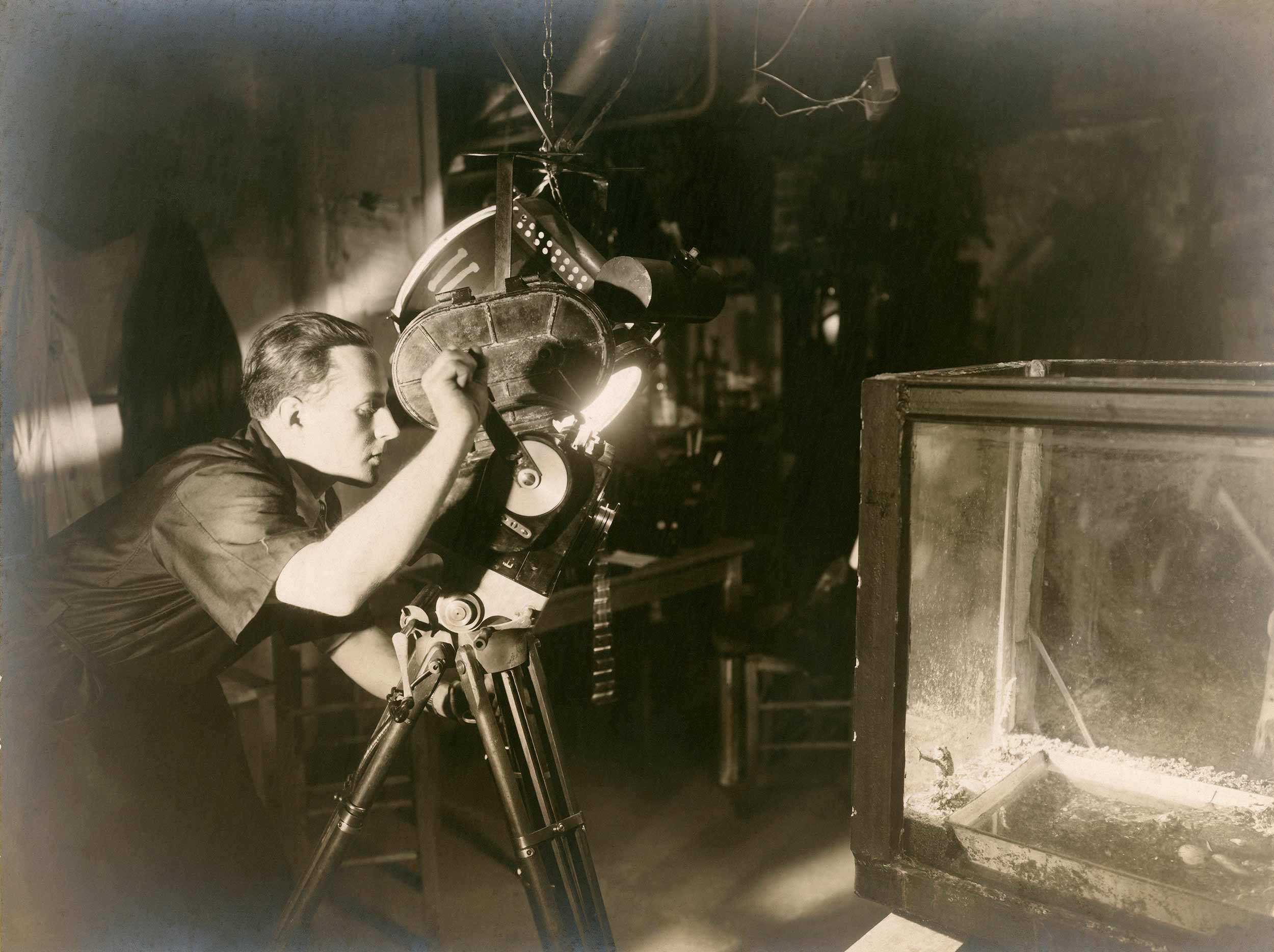
Jean Painlevé

I loved the Jean Painlevé exhibition at the Jeu de Paume, if only for its offer of the opportunity to see these strange films on the big screen. There are a number of short films, many of which will be unique and revelatory to viewers. True to their intentions, the films are educative on many levels. We learn about male sea horses giving birth, watch octopuses mate, examine various oils under microscopes (mainly kaleidoscopic drops exploding like fireworks), and marvel at the effect of light on sea urchins. Some of the documents of flowers and other natural phenomena, accelerated to show slow evolution and natural processes in minutes of film were also fascinating for their resonance with early experimental film and new objectivity photography.

Jean Painlevé, Étoile de mer, vers 1930


Also wonderful was the exploration of the cinema in these films. Painlevé was concerned to educate and convey information, but he was just as focussed on exploring the possibilities of the cinema which, in his time, had not yet been fully revealed. In images that in which sea creatures merge into their environment or flowers /plants bloom, and asteroids move around the sky, Painlevé uses natural events to explore the possibilities of the camera. The beauty of his manipulation of light and dark, the framing, the keen awareness of the cinema's ability to manipulate time and space were all quite breathtaking. Painlevé may have been trained as a scientist, but he also had a keen sense of the way that images work. 

Jean Painlevé, Buste d'hippocampe, vers 1931

More disappointing, however, was the exhibition's contextualization of Painlevé's experiments. The films are presented as objective documentary records of Painlevé's scientific experiments and research. Thus, there is little to no mention of the staging of the films. Because of the way that Painlevé filmed, namely, removing the manipulation of the pro-filmic, we watch sea horses in their life cycles as if Painlevé was underwater with them. The removal of the marine life from their natural habitat, their placement in tanks, the staging and manipulation of the animals, clearly compromised, or at least, contributed to the definition of the kind of documentary film that he was making. This isn't to detract from the splendour of his images, or the amount that we learn from watching the films. Rather, it speaks more my disappointment that there was not enough information on what these films were actually doing.

Jean Painlevé, Détail de la pâle d'une queue de crevette, 19229

Another, related, thing that is not acknowledged by the exhibition is the historical moment of the cinema in which he was making these films. Painlevé was filming at a time when the lines between fiction and documentary, between experimental and documentary were not yet fully drawn or defined. Theorists were still trying to come to terms with what the cinema was about in this moment, and Painlevé was one of the experimenters asking these questions. Thus, his contribution to the very important debates about the cinema is elided in this otherwise fascinating exhibition

Saturday, April 30, 2022

The Delight of Contemporary Art @ Pinault Collection, Bourse de Commerce

Maurizio Cattelan, Others, 2011

I took my friend Harriet to see the new exhibitions at the Bourse de Commerce last night. As we walked along the outside of Tadao Ando's concrete cylinder, laughing at some of Bertrand Lavier's objects in the display cases that have been there since the building's days as the Bourse, marvelled at the fresco depicting trade in the colonies, and the magnificent reflections of the early evening sun shining through the latticed roof of the dome, I thought that this magnificent building should be the mandatory first stop on every tourist visit of Paris. Visiting the Pinault collection is pure pleasure. It is, perhaps, the most comfortable and welcoming modern art museum in a major city. It's difficult to describe how delightful it is to wander the exhibitions and the building itself.

Charles Ray, Boy With Frog, 2009

We stopped in front of a Lavier piece of two crystal vases accompanied by the text "only one of these vases is real" to have a long discussion with two other visitors about which they thought was real. Being the know all, I was convinced as soon as I saw the display that the two vases were identical, and Lavier had simply included the text to keep us guessing. As Harriet pointed out, if only one was real, what kind of real would that be? In fact, whether or not the vases were real or fake was not the attraction of the display, but rather, the point of the piece was its play with our heads and temptation into animated conversation with strangers. This level of visitor engagement is maintained throughout the exhibitions on the first and second floors. 


Ryan Gander, With /.../.../..., 2019

I remember a friend bemoaning that she didn't really understand the Urs Fischer statue in the collection's opening exhibition. However, I am pretty sure that a lot of the art on display at the Pinault is not that difficult to "get".  Ryan Gander's stuttering Animatronic Mouse who has gnawed its way through the gift shop wall, or Marizio Cattelan's pigeons looking down from the third floor railing are exactly what they appear to be. The mouse and the pigeons are intruders into the precious world of art, making fun of its seriousness, showing us all that laughter and wonder are valid responses to art. 

Roni Horn, Dead Owl, 1997

The two temporary exhibitions also encouraged a frolick with art, eliciting physical and emotional responses. Roni Horn and Felix Gonzalez-Torres' exhibition on the ground floor created a lovely dialogue between the two artists. My absolute favorite piece was Horn's Dead Owl, 1997. The two fluffy white owls are both adorable and creepy. Their soft silken feathers make them like dolls sitting on their perches. But the title reminds us, they are dead, stuffed animals. The owl was photographed in Iceland, a country for which Horn has an ongoing fascination. But as an American, I am sure, Horn is aware of their symbolism within Native American culture as harbingers of death. Making the owls even more cuddly and curious, but simultaneously, unnerving is the fact that when standing in front of them, our eyes never rest. We constantly flit between one photograph and the other, comparing them, looking for differences, as if expecting them to reveal the answer to a puzzle. Of course, walking from side to side, the eyes of both owls never leave us, following our every move. Being watched by art works is always the most unsettling experience in a museum.

Charles Ray, Oh! Charley, Charley, Charley, 1992

There is a large Charles Ray exhibition in the level two galleries, complementing the Centre Pompidou's spring exhibition. Ray also has three pieces under the dome in the main circular gallery: a child, himself and an old, reconstructed truck. Ray's works are also unnerving, but unlike my experience of the Pompidou exhibition, my resounding response to the pieces on display at the Pinault was his obsession with naked male bodies, especially his own and those of young boys. It's true that a lot of his works re-conceive religious and classical sculpture, they also play with the traditional display of sculpture. In addition, Ray manipulates spaces and size and makes our movement through the gallery visible through the changing size of the sculpted figures when seen from different perspectives. But these works are not only working on an intellectual level. Ray has an obsession with pubescent male bodies and sexual fantasies, and you don't need an art history degree to get that!

Thursday, October 28, 2021

Gerhard Richter: Drawings @ Hayward Gallery

Gerhard Richter, 22. Juli 2020, 2020

This small exhibition in the HENI Project Space at the Hayward Gallery offers a peaceful respite from the crowds milling around the Southbank Centre. Surrounded by this series of drawings and watercolours, it felt like I was seeing Richter, the old man still thinking about issues that have preoccupied him for over six decades. The works are, in the vein of pencil drawing as a medium, very delicate. Nevertheless, they are filled with familiar scratchings and scrapings, erasure and redrawing that we know from Richter's paintings. Similarly, the rubbing of the pencil sketches so that the definition of the line is smudged remind of the characteristic obfuscations of his paintings. 

Gerhard Richter, 24 juli 2020, 2020

In some of the scrawls and scratches we see faces beginning to emerge, reminding of those faces and figures studied in the drawings of Leonardo. Pensive faces, gaping mouthed cherubs and hands, eyes, noses, in the same way that artists have practiced these forms in their drawings over centuries. This debt  to the renaissance masters and their use of the drawing as a medium to explore the possibilities of expressing emotion has to be a conscious exploration. It is as though Richter asks this question (like he does in his paintings): what is this medium I am using? What is drawing? In many ways, Richter explores the medium what drawing is, as if it were a painting. Line is not a simple, one dimensional phenomenon in Richter's drawings. Line is heavy and straight, it is gentle and flowing, dark and airy, shown through multiple different intensities of the pencil. In addition, there are multiple forms of line, multiple meanings of line: scraggy, confident, rethought, playful.

Gerhard Richter, 27.4.99 (1), 1999

He also includes interesting explorations of time and space. Space in the drawings is fragmented, reflected, refracted, made multi-dimensional and superficial, it is created and destroyed, but space is always multiplied, though not necessarily in a geometry and dimension that we can compute. In this play with space on the paper, we see Richter push his art into abstraction. 

Gerhard Richter, 31.08.2008, 2008

Included in the exhibition are a handful overpainted photographs. If I didn't know how involved Richter was in his exhibitions, I might have assumed that the gallery's curator had added these works out of some unexplained desire to confuse. But Richter has surely included the overpainted photographs to push still more insistently at the definition of what a drawing is. By placing them in an exhibition of drawings, they question the definition of a photograph. Is a photograph a form of drawing, preparation for a larger, more ambitious (and colourful) work to come? Is photography the way to engage with the history of painting and representation? Again, we find the process of erasing, smearing, obscuring through the use of grey paint over a photograph that he uses in the drawings. For Richter, the photograph as support for painting or drawing as an idea for painting puts the emphasis on the process, the application of the medium. This enquiry is as important as the questions that surface about definition of the medium itself. 

Gerhard Richter,  21.11.2017, 2017

If Anish Kapoor spent his lockdown reflecting on the violence and rage of the world in which we are living, as well as the need to bring animals and humans inside out and drag them through their undoing in the abattoir, Richter spent his in a very different way. The old man approaching the end of his life was deep in thought about his medium, about representation, about the impossibility and unfinishedness of all expression.